Let’s talk about plus size jeans. Not the ones that gape at the waist, pill after two washes, or somehow fit everywhere except the thighs. I spent nine years as a buyer at Torrid, walking factory floors and negotiating fit specs, and I can tell you exactly why your jeans let you down. The body’s not the problem. The pattern is.
Most denim is built from a straight-size block and then scaled up. In the industry, that’s called grading. Good grading makes real adjustments for the waist-to-hip ratio, the thigh circumference, and the distance from hip to knee. Lazy grading just multiplies every point on the pattern by a bigger number. The result is a size 20 that fits like a size 12 with taller seams. That’s why the waistband digs in even though the legs are loose, or why the zipper bubbles after one wear. It’s not your shape. It’s the math.
So when you shop plus size jeans, you need to ask different questions. Not “will this cover me” but “where does the measurement actually hit.” Look at the rise. A 10-inch rise sits at the natural waist and holds the belly without squeezing it. Look at the hip measurement, not the size number. And look at the fabric. A rigid jean needs precise grading to work on a curvy frame. A jean with 2% stretch gives you room to breathe, but too much stretch means the knees bag out by noon.
The key is to focus on three measurements before you ever look at the tag: the rise, the hip, and the inseam. Rise controls where the waistband hits. Hip determines whether the jean will pull across the thigh. Inseam tells you if the length will work with your height.
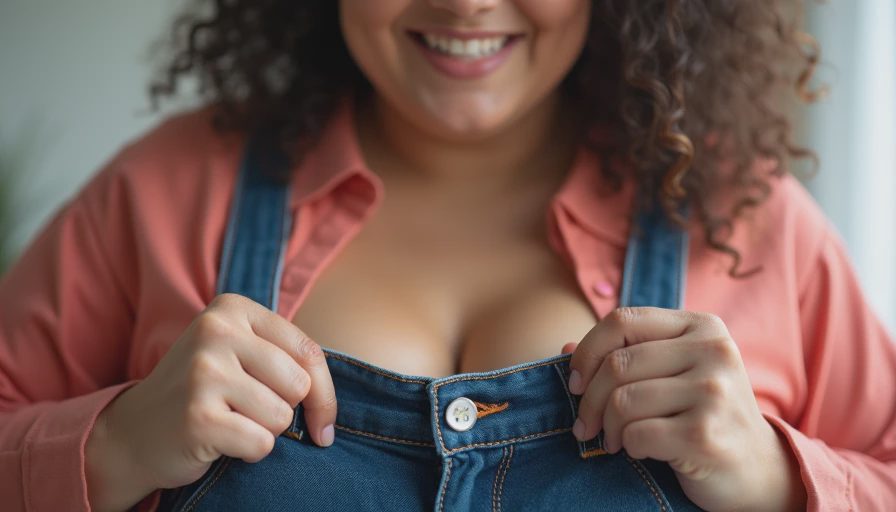
What to Look For in Plus Size Jeans
Start with the rise. If you carry weight in your stomach, choose a mid-rise between 9 and 11 inches. It will cover your belly without feeling like a corset. Next, check the thigh. A jean that is too narrow in the thigh will pull at the hip and create that dreaded horizontal line, while a jean that is too wide leaves fabric flapping. Look for a straight or slightly tapered leg, not a skinny cut that tapers from a wide hip. Finally, look at the back pockets. They should be placed to match your actual back shape, not copied from a size 6.
When I evaluate a pair, I measure the waistband when laid flat and compare it to the hip at the widest point. A difference of roughly 10 to 12 inches between those measurements signals that the pattern was actually designed for a plus-size body. If the difference is only 6 or 7 inches, you are wearing a scaled-up straight jean, and it will fight you all day.
The Brands Doing Plus Size Jeans Right
There are a few brands that understand the assignment. Lane Bryant has built its denim line around a curvy fit, with a higher rise and a deeper hip curve. Their high-rise skinny jean is a solid workhorse, though it runs long, so budget for a hem. Torrid’s Bombshell jean is another one I know from the inside: it has real stretch and a waistband that doesn’t dig, but it is cut for a more dramatic hourglass. Universal Standard, meanwhile, does some of the best premium denim in the market. Their jeans are expensive, anywhere from $88 to $148, but they grade across a full range and offer free size exchanges. Old Navy has improved its plus fit over the past few years, and at $40 to $55, it is the easiest entry point for trying a new cut. I have also seen solid options from Eloquii, especially in their wide-leg styles.
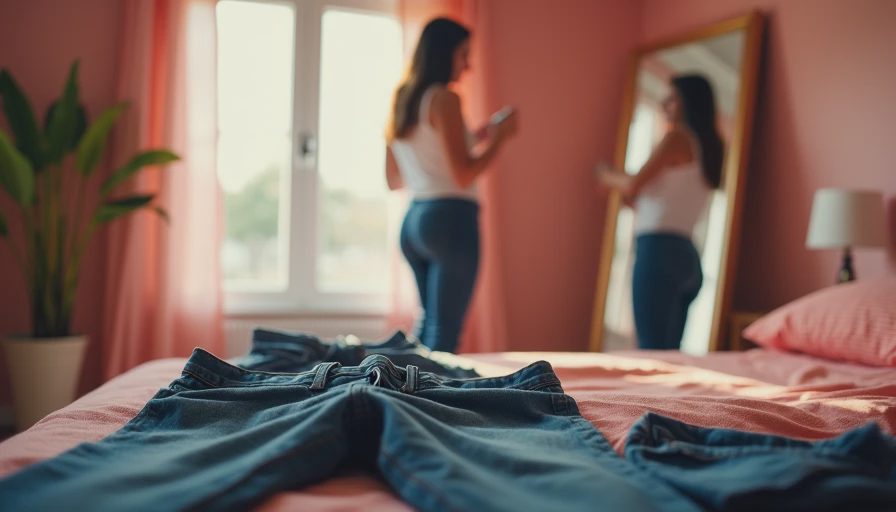
Here is the thing about brand loyalty: every body is different. I have clients who swear by Lane Bryant and others who can’t get Torrid over their hips. The trick is to order the same style in several sizes, try them on at home, and return what doesn’t work. Most of these brands offer free returns, so do not let the fitting-room anxiety talk you out of it.
How to Buy Plus Size Jeans Online Without the Return Disaster
Measure a pair of jeans you already love before you shop. Lay them flat and write down four numbers: the waistband, the hip at its widest, the rise, and the inseam. Then compare those numbers to the size chart on the website. Ignore the letter size entirely. Also, check the fabric content. I want 98% cotton and 2% elastane for everyday denim. Too much stretch means the jeans will sag by lunch. Too little means they will not move with you.
Next, read the reviews for your size range. A five-star review from someone who wears a 14 can be misleading. Look for reviewers who mention wearing a 20 or 22 and see what they say about the thigh and waist. When in doubt, go up a size. It is easier to take jeans in than to let them out.
Style Notes for Work, Weekends, and Everything In Between
Once you have a pair that fits, styling gets easier. With a straight-leg or wide-leg plus size jean, I like a fitted top that doesn’t cling, a pointed-toe flat or a low boot to lengthen the line, and a jacket that hits at the hip bone, not the belly. If you are building a professional wardrobe, skip the distressed wash and go for a dark indigo or a black jean. Pair it with a blazer and you are dressed for a Baltimore morning in the office or a lunch meeting in Fells Point. For weekends, the same dark jean works with a chunky sweater and sneakers. When you find a cut that works, order a backup in the same wash.




No notes yet — write the first one.