When I was buying plus-size workwear, the same problem kept coming up: business casual women were being sold clothes built like weekend basics, then told to make them office-ready with a blazer. That is not styling. That is a grading shortcut with better lighting. If you need outfits for a desk, a classroom, a client meeting, or a nonprofit boardroom, the goal is not to look smaller. The goal is to have clothes that move with your body, keep their shape, and stop fighting your shoulders by 10 a.m. The body's not the problem. The pattern is.
Start with the fit points that matter most
In the fitting room, I reach for the shoulder seam before I look at the size tag. Every time. For business casual women, the shoulder-to-bust ratio tells you more than the number on the label ever will. If the shoulder is too narrow, the sleeve starts pulling. If the armhole is shallow, the garment climbs when you reach for a keyboard, a steering wheel, or a coffee mug. If the bust is graded up with extra width but no extra length, the shirt tents and the hem rides up.
That is why some tops feel fine in a 14 and weirdly wrong in a 22. Many brands scale up size 6 patterns instead of changing the shape. A good work shirt should give you room through the bust without swallowing the waist and without cutting into the upper arm. Look for brands that publish garment measurements, not just vague size charts. Universal Standard is strong on consistent grading. Eloquii usually understands workwear proportions better than fast-fashion labels. If a brand cannot tell you the chest, waist, hip, and sleeve measurements, I treat that as a warning sign, not a mystery to solve.
A simple test: lift your arms, sit down, and cross them. If the blouse twists, the dress yanks, or the jacket climbs halfway to your ribs, the fit is off. That is not a failure on your part. It is a pattern problem.
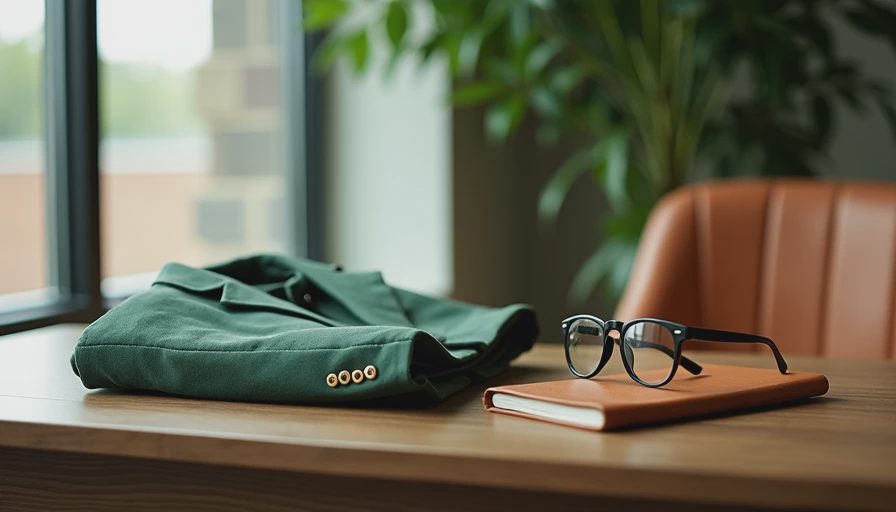
Choose fabrics that can survive a workday
Fabric matters just as much as shape. For business casual women, the best pieces are usually made from ponte, crepe, wool blends, twill, or a dense knit with structure. Ponte is popular for a reason: it has enough stretch to sit through a meeting and enough recovery to not bag out by lunch. Crepe drapes well without clinging. A cotton poplin shirt can be excellent if the armhole and bust are cut right, but a thin shirt with a tiny bit of stretch often turns limp after one wash.
I also pay attention to lining. A lined blazer or skirt hangs better, feels less fussy, and usually reads more finished than an unlined piece with a cheap fuse. Old Navy Plus can be a budget-friendly place to find a basic pant if the cut works on your frame. Lane Bryant often does better with easy trousers and stretch suiting than brands that only want to sell a standard straight-size office look in bigger numbers. On the higher end, ELOQUII has strong work dresses when you need color, shape, and room through the torso.
Avoid fabrics that wrinkle if you just look at them. If a dress comes out of a chair looking like it lost an argument, it will do the same in your car on the way to work. Business clothes need a little backbone.
Build three outfits you can repeat without thinking
The easiest wardrobe wins come from formulas, not from chasing one perfect outfit. For business casual women, I like a blazer with a straight-leg pant and a simple shell, because it gives you structure without forcing a suit. A knit blazer from Universal Standard or a ponte blazer from Eloquii can do more for your closet than four random tops that all need special underpinnings.
The second formula is a dress with a cardigan or soft jacket. A sheath is not the only option. A fit-and-flare midi in a dense knit can work beautifully if the waist sits where your body actually bends. The third formula is a column of color: matching top and pant or top and skirt, then adding one crisp layer over it. That look is easy to repeat, and it avoids the chopped-up effect that happens when a top ends at the widest point of the hip and the pant starts there too.
If you want fewer bad mornings, build around colors that talk to each other. Navy, black, espresso, cream, olive, and charcoal do most of the heavy lifting. Add one or two accent pieces in rust, cobalt, plum, or deep green if you want more personality. You do not need a closet full of special-occasion office clothes. You need repeatable pieces that make getting dressed boring in the best possible way.

Shop online like a fit skeptic, not a hope shopper
Online shopping gets expensive when you buy by mood instead of measurement. For business casual women, I want the garment specs before I want the color story. Measure your own favorite shirt or blazer flat across the shoulders, bust, waist, and hem, then compare those numbers to the product page. Reviews help too, but read them for fit clues, not praise. Look for notes about armhole depth, sleeve length, rise, and whether the fabric holds its shape after wear.
When a site only shows one model in one size, slow down. A piece can look polished in a size 10 and fail completely in a 20 because the pattern was never truly graded. That is especially true with blazers and button-front tops. Buttons gaping at the bust are usually a ratio problem, not a need for a larger size across the board. Sometimes going up a size fixes the chest and ruins the shoulder. Sometimes the answer is a different brand entirely.
I tell styling clients to keep a short list of brands that work on their frame and stop arguing with the rest. That list saves time, money, and a lot of returns. Once you know which labels respect your proportions, workwear stops feeling like a scavenger hunt.
Build a closet that handles the whole week
If you want a practical rotation, start with two pants, two tops, one dress, one jacket, and one backup layer that can work over a tee or blouse. That is enough to cover a normal week without washing every night. For business casual women, the win is not a giant wardrobe. It is a small set of pieces that fit your shoulders, close at the bust, and keep their shape after a full day.
I like to think about office dressing the way I think about factory approval samples. The first version tells you a lot. If the shoulder slope is wrong, it will stay wrong. If the armhole is too tight, no amount of styling fixes it. The same is true here. Once you find a blazer that sits cleanly across the back, a trouser that rises smoothly, and a knit that does not twist, you have a base you can repeat all season.
That is the real trick. You do not need permission to take up space, and you do not need clothes that pretend otherwise. You need patterning that respects the body in front of it. The body's not the problem. The pattern is.





No notes yet — write the first one.