
Yes, I’m Really Comparing Clothes to Candle Wax
Okay, hear me out.
Every Sunday at the Fells Point farmer’s market, I sell handmade candles alongside my styling work. People come for the scents — lavender bergamot, cedarwood vanilla, that cozy “Baltimore harbor after rain” blend — but they stay to chat about life, bodies, and clothes. One afternoon a woman picked up a chunky soy candle and said, “This feels like it would fit me better than most dresses.”
That casual comment cracked something open. Because she was right. Candle making and plus-size pattern making have more in common than you’d think. And the lessons from my little side hustle have genuinely made me a better stylist.
Let’s talk about molds, wax, and why the container matters so much. The body’s not the problem. The pattern is.
The Mold Is the Pattern
In candle making, everything starts with the mold. You choose the shape — tall and elegant, short and squat, wavy or geometric. The mold determines what the final candle can become.
Sound familiar?
The pattern in clothing is the mold. If the mold was designed for a completely different shape, no amount of fancy wax (fabric) or pretty label (marketing) will make it work. I’ve poured hundreds of candles that cracked or warped because I tried to force soy wax into a mold that wasn’t designed for its shrinkage rate. Same thing happens when brands take a straight-size pattern and just make it bigger.
During my Torrid years I watched this play out with real garments. Beautiful fabrics poured into terrible molds. The customers — the final candles — came out cracked and frustrated.
The Cooling Process Matters
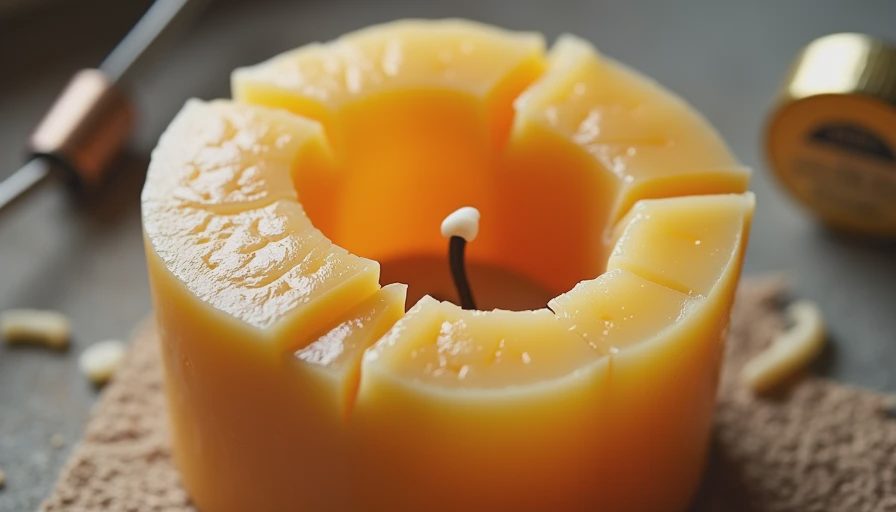
One of the biggest lessons in candle making is patience with cooling. If you cool too fast, you get sinkholes and cracks. Too slow, and the wax can crystallize weirdly. The perfect candle needs the right environment and time to set properly.
Bodies are the same. Different sizes, different proportions, different “cooling rates.” A size 14 and size 28 don’t respond to the same construction techniques the same way. Rushing the grading process (the cooling) creates exactly the fit issues we complain about — pulling, gaping, rolling waistbands, armholes that attack.
I learned this the hard way one weekend when I rushed a big batch of candles for a market. They looked perfect when I unmolded them. Two days later? Sinkholes everywhere. Just like that viral dress that looked amazing in photos but disappointed in real life after a few hours of wear.
Cuff the cat, my constant studio supervisor, loves batting at the cracked rejects. He’s taught me to slow down and respect the process.
Wax Types = Fabric Choices
Not all wax behaves the same:
Paraffin: Cheap, holds scent well, but can feel greasy and doesn’t burn cleanly.
Soy: Natural, clean-burning, but needs specific conditions and additives.
Beeswax: Beautiful, long-burning, but expensive and needs special handling.
Fabrics work exactly like this. A cheap polyester might look similar to a quality ponte knit on the hanger, but their behavior on a body — especially a larger body under stress points — is completely different. The brands that understand which “wax” (fabric) works best in which “mold” (pattern) are the ones whose clothes last and feel good.
Laura still laughs about the time I brought home fabric swatches and made her feel them while I explained fiber content like a sommelier. Our daughter Nia now asks if new clothes are “good wax” or “bad wax.” Six-year-olds have zero filter and excellent instincts.
The Wick Problem (Support Where It Matters)
A candle needs the right size wick for its diameter. Too small and it tunnels. Too big and it smokes and burns too fast.
In clothing, this is about reinforcement and construction at stress points — shoulders, underarms, waistbands, seat seams. Larger sizes need different “wick” support. Brands that use the same construction details across all sizes are basically trying to burn a 3-inch candle with a tiny tea light wick. It doesn’t end well.
I’ve argued with factories about adding extra reinforcement to larger sizes. Some listened. The ones that did had dramatically fewer returns.
What My Candle Studio Taught My Styling Clients
When clients come to the studio feeling defeated by shopping, I often start with a candle metaphor. We light one of my harbor-scented candles, and I explain:
Your body is the wax — unique and full of potential.
The clothes are the mold — some are beautifully designed for you, some are not.
The goal is finding (or altering) the right mold so you can shine without cracking under pressure.
The visual seems to help. One client who struggled with “nothing fits my shoulders” lit up when I compared it to trying to pour a wide candle with a narrow mold. She finally understood it wasn’t personal.
Life Lessons from the Pouring Table
Measure twice, pour once. Always check shoulder width and armhole depth first.
Respect the material. Good fabric can’t save a bad pattern.
Some cracks can be fixed. Small alterations can turn a “maybe” garment into a “hell yes.”
The prettiest mold isn’t always the best. Marketing photos lie. Real fit testing tells the truth.
Cats will knock things over. Keep your expectations flexible.
Cuff has knocked over more cooling candles than I care to count. Hem prefers sleeping in the fabric drawer. Their chaos keeps me grounded.
Nia’s Take on All of This
My six-year-old has never been told her body is wrong. She picks outfits with absolute confidence and zero regard for “flattering.” When she helps me at the market (mostly by rearranging candles into rainbow orders), she tells customers “This one feels like a hug” or “This one is too scratchy.”
Kids understand fit on a primal level. They haven’t absorbed the industry nonsense yet. Watching her reminds me why this work matters.
The Real Metaphor
Clothes should be like a perfectly poured candle:
They should hold their shape without cracking under normal use.
They should feel good and look beautiful in your actual environment.
They should bring a little joy every time you light them (wear them).
Anything less is a manufacturing problem, not a you problem.
So next time you’re frustrated in a fitting room, remember: maybe the mold was wrong. Maybe the cooling was rushed. Maybe they used the wrong wick.
Then go find (or demand) better molds.
And if you’re ever at the Fells Point market on a Sunday, come say hi. I’ll let you smell the “Fresh Start” blend and we can talk about your latest fit victories. Cuff might even supervise.
The body’s not the problem.
The pattern — and sometimes the pouring technique — is.
Now if you’ll excuse me, I have a new batch of candles cooling and a six-year-old who wants to pick the next scent.



No notes yet — write the first one.