If you shop plus size skirts often enough, you learn a fast truth: the hanger promise and the fitting room result are rarely the same thing. After nine years on the buying side, I can tell you the issue is usually not your body. It is the waistband draft, the hip sweep, the fabric recovery, or a pattern that was scaled up without respecting how a real plus-size body moves. The body's not the problem. The pattern is.
The first thing I look at in plus size skirts is the waist-to-hip relationship. If the brand only added inches everywhere, the skirt will twist, ride up, or pool in a weird place by lunchtime. A good skirt gives you room where the body needs room, then keeps the shape of the waist where it belongs. That sounds basic because it is basic, yet so many brands still miss it.
Start With the Waist, Then Check the Drift
The smartest way to shop is to ignore the size tag for one minute and read the construction. Is the waistband elastic all the way around, partly elastic, or fully tailored with a zipper? Does it sit at your natural waist, below it, or somewhere in the middle trying to please nobody? Those details matter more than the number. A well-built skirt should stay put when you sit, walk, and climb a few stairs, not just when you stand still in front of a mirror.
This is where fit grading shows up. A lot of plus size skirts are graded from smaller sizes with the same proportions, which means the rise can get shallow and the sweep can get too wide or too narrow for the new size range. When that happens, the skirt may technically zip, but it does not move like clothing made for you. I have seen this over and over at the buying desk. The sample looks fine on a fit model, then the returns tell the story.
Look for side seams that hang straight, a waistband that does not curl, and fabric with enough recovery to bounce back after sitting. Ponte, dense knits, cotton sateen with a little stretch, and heavier twill usually behave better than thin fabric that needs constant babysitting.
Cuts That Earn Their Rack Space
My favorite plus size skirts usually come in a few shapes that have actually earned their keep in fitting rooms. An A-line is the easiest win because it gives the hem room to swing without fighting the body. A wrap style can work beautifully if the overlap is deep enough and the tie is anchored so you are not readjusting every time you move. A pencil skirt is still useful, but only when the fabric has enough stretch and the back slit is cut with real walking in mind.
Pleats can be excellent when they are stitched down through the hip and released lower, because that keeps the volume where it belongs instead of building bulk at the waist. Denim skirts work best when the denim is substantial and the rise is honest. I am cautious with ultra-light rayon unless it has lining or a weighty drape, because cling is not a moral failure and it is also not a fit strategy.
My strongest advice is to try the same skirt idea in at least two fabrics. A shape that looks choppy in a stiff polyester blend may look expensive in a ponte or woven twill. A shape that puddles in a drapey knit may become your workhorse in a fabric with more structure. That is why one style can look genius in one size and fall apart in another.
Why the Same Skirt Fails at Larger Sizes
This is the part the industry likes to skip over. When plus size skirts are made with shortcut grading, the waistband can grow faster than the hip, or the hip can grow faster than the hem, and suddenly the proportions are off. If the brand built the sample around a smaller body and simply enlarged the pattern pieces, the skirt may pull across the stomach, flare too much at the side seams, or lose its shape after one wear.
I used to argue about this constantly with factories. A manufacturer would say the skirt fit the spec because the measurements matched the chart. I would say the chart is not the same thing as the body. A skirt can hit every measurement and still feel wrong if the grainline shifts, the pocket bags add drag, or the waistband has no structure. That is the boring little machinery behind why some brands get repeat customers and others get returns.
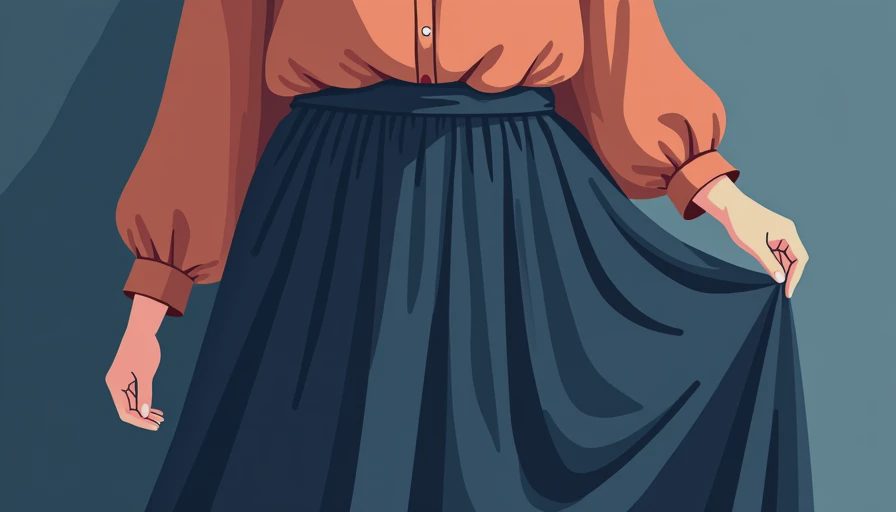
The Best Length Is the One You Can Move In
Length matters because proportion matters, but not in the cartoon way people talk about online. If you wear a midi that stops at the widest part of the calf and the hem fights your stride, you will hate it by noon. If a mini sits at a point where you are tugging it down every ten minutes, that is not a style problem. It is a garment problem. A skirt should let you sit through a meeting, get in and out of a car, and walk through a grocery store without becoming a full-time project.
For office wear, I like hemlines that land below the knee or mid-calf, especially in a fabric with a little body. For weekends, an above-the-knee denim or twill skirt can be easy and practical if the rise is right. For travel, the best versions are the ones that recover after being folded in a suitcase and do not wrinkle into a mess after one seat on the train or plane.
When I style clients in Baltimore, I keep the formula simple: solid fabric, dependable waistband, one sharp shoe, done. You do not need a complicated top to make a skirt work. You need the skirt to do its job.
Brands and Categories Worth Starting With
I do not trust every brand equally, because I have seen too many size charts that look generous and behave like fiction. Universal Standard tends to understand consistency better than most midprice labels, especially in knit and structured basics. Eloquii usually gives you bolder fashion choices and better detail work than the average mall brand. Lane Bryant still has useful workwear and a decent track record on straightforward silhouettes. Torrid can be hit or miss depending on the fabric, but when they get a skirt right, it usually has enough ease to live in. Old Navy Plus is worth checking for simple, casual pieces, especially if you want something affordable to test a shape before spending more.
The brands I trust most are the ones that show the same skirt across multiple sizes and make the proportions believable, not just the measurements. If the product photos only show a size 14 and the reviews complain about the waistband rolling by size 20, believe the reviews. That is not drama. That is data.
A Real-World Way to Shop Without Wasting a Saturday
The next time you try plus size skirts, do it with a short plan. Sit down in the fitting room, because that is where waistbands tell the truth. Walk ten steps. Bend. Reach. Pull a phone out of a pocket if it has one. Check whether the hem stays level and whether the skirt still feels like itself after movement. If it twists, that usually means the pattern is fighting your shape, not that you need a different body.
If you are building a work wardrobe, start with one dark skirt, one lighter neutral, and one fabric with more personality. If you are shopping for weekends, pick the shape that lets you move first and decorate later. When plus size skirts are drafted correctly, you stop noticing them in the worst way and start noticing them in the best way: they make getting dressed easier.
And honestly, that is the whole point. The body's not the problem. The pattern is.


No notes yet — write the first one.